Washington, DC Neighborhood Guide
Living in Washington, DC: Historic Rowhouses, Riverfront Districts and Rock Creek Park
Washington, DC is a city of 131 neighborhoods spread across four quadrants and shaped by three waterways: the Potomac, the Anacostia and Rock Creek. The monuments and museums of the capital are only part of the picture. Daily life here runs through weekend markets, tree-lined rowhouse blocks, trail systems that start a few minutes from home and a waterfront that has been rebuilt in the last decade.
For buyers, the District rewards choosing a setting before choosing a house. A Federal rowhouse on Capitol Hill, a Queen Anne in Cleveland Park, a Beaux Arts residence in Kalorama and a newer building near the Anacostia each offer a different routine. This guide walks through the neighborhoods buyers compare most often, the homes found in each, and the parks, markets, venues and transit connections that define them.
How the District is organized
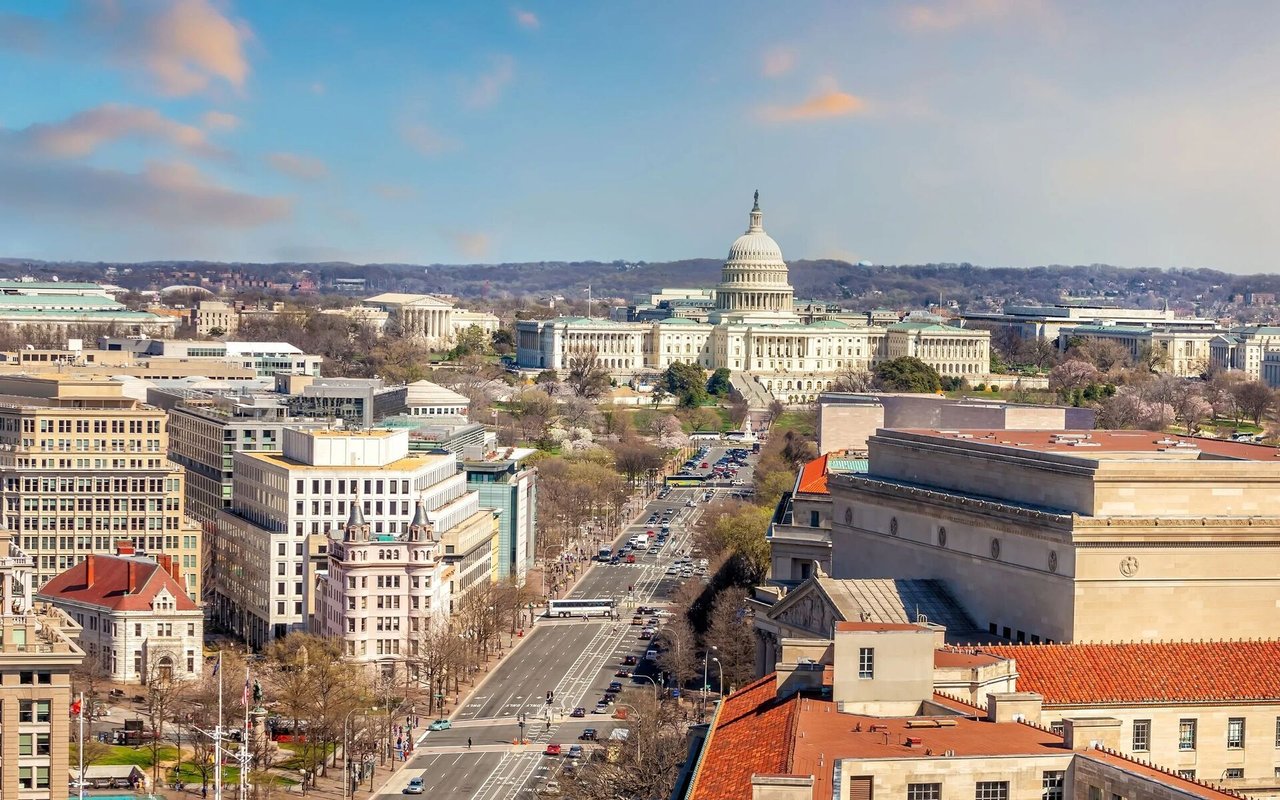
The city is divided into Northwest, Northeast, Southeast and Southwest quadrants, which is why every address carries a quadrant suffix. Most of the neighborhoods buyers ask about sit in Northwest: Georgetown, Dupont Circle, Kalorama and Cleveland Park, with Rock Creek Park running along their edge. Capitol Hill, which spreads across the Southeast and Northeast, and Navy Yard in the Southeast, The Wharf is in the Southwest, and Brookland, NoMa and Union Market are in the Northeast. Knowing the quadrant tells you roughly which Metro line, trail and commercial corridor you will use most.
Washington, DC neighborhoods buyers compare
Capitol Hill and Eastern Market
Capitol Hill is anchored by Eastern Market at 225 7th Street SE, a public market that has served the neighborhood since 1873. Indoor merchants sell meat, seafood, baked goods, flowers and cheese Tuesday through Sunday, and on weekends vendors fill the street with farm stands, arts and crafts and live music. Market Lunch is known for its blueberry buckwheat pancakes. The surrounding blocks include Federal rowhouses, and Barracks Row is just to the south. The Eastern Market station is served by the Blue, Orange and Silver lines. For recent changes on the Hill, see our look at Capitol Hill's new openings.
Georgetown
Georgetown was founded in 1751 as a tobacco-trading town at the head of navigation on the Potomac, and its historic district, roughly 4,000 buildings dating from about 1751 to 1950, was the first one designated in DC. Federal, Greek Revival, Italianate and Queen Anne houses line narrow streets that follow their own grid. M Street and Wisconsin Avenue hold boutiques, galleries and jewelers, the Washington Harbour complex offers riverside dining, and the Old Stone House is the oldest known building in the city. Dumbarton Oaks gardens, Tudor Place and Oak Hill Cemetery are also part of the neighborhood. The towpath of the C&O Canal begins here. Georgetown has no Metro station, so residents rely on DC Circulator buses, rideshare and the walk from Foggy Bottom. We cover newer dining in Georgetown's courtyard openings.
Dupont Circle and Kalorama
Dupont Circle is built around its fountain and a grid of rowhouses, most built before 1900, with Queen Anne and Richardsonian Romanesque detailing. Larger mansions line the diagonal avenues, and Embassy Row runs along Massachusetts Avenue, part of a city that hosts 177 foreign embassies. The Phillips Collection and the Dupont Underground art space are here, along with a weekly farmers market on 20th Street NW. The Dupont Circle station is on the Red Line. Kalorama sits just to the northwest, divided by Connecticut Avenue into the Sheridan-Kalorama and Kalorama Triangle historic districts. Many of its grand residences were designed in the Beaux Arts style.
Cleveland Park and Upper Northwest
Cleveland Park's historic district, added to the National Register in 1987, is known for late 19th-century houses in Queen Anne, Georgian Revival, Mission Revival and Tudor Revival styles. Connecticut Avenue is the commercial spine, with the Art Deco Uptown Theater and the 1930 Park and Shop, one of the earliest strip malls in the country. The Cleveland Park station is on the Red Line, and Rock Creek Park forms the neighborhood's eastern edge. Farther up Northwest, American University Park is known for its bungalows.
Logan Circle, Shaw and U Street
These adjoining neighborhoods pair historic character with newer shops and restaurants. The Green Line stops at Shaw-Howard University and at U Street, a station named for the African American Civil War Memorial. U Street is the birthplace of Duke Ellington and home to the historic Howard Theatre, while the 9:30 Club, the Landmark Atlantic Plumbing Cinema and Blagden Alley are in the Shaw area. Logan Circle adds old-time charm alongside newer shops and eateries.
Brookland
Brookland is in Northeast and is served by the Brookland-CUA station on the Red Line. Many Queen Anne and other Victorian houses still stand alongside bungalow-lined streets. Landmarks include the Franciscan Monastery of the Holy Land in America, built in 1899, and the 1840 Greek Revival Brooks Mansion. The Monroe Street Market development gives the neighborhood a newer retail and residential center, and the neighborhood has an arts zone.
Navy Yard and Capitol Riverfront
The riverside blocks south of the Capitol were once the industrial Washington Navy Yard, and the U.S. Navy Museum remains. Today the area is organized around Nationals Park, with more than 40,000 seats and views of the Capitol dome, and Audi Field, home to D.C. United and the Washington Spirit. Yards Park hosts a free summer concert series, Canal Park has a seasonal ice rink and a farmers market, and the Anacostia Riverwalk Trail runs along the water. Bluejacket, The Salt Line, Osteria Morini and District Winery anchor the dining. The Navy Yard-Ballpark station is on the Green Line.
The Wharf and Southwest Waterfront
The Wharf, at 760 Maine Avenue SW, stretches along the Potomac with four piers: Market, Transit, District and Recreation. The Anthem is a 6,000-seat concert hall, Pearl Street Warehouse and Union Stage host smaller shows, and the Municipal Fish Market, the country's oldest continuously operating open-air fish market, dates to 1805. Hank's Oyster Bar and Rappahannock Oyster Bar are among the restaurants, and the InterContinental and Pendry hotels sit on the waterfront. A free Southwest Shuttle connects to L'Enfant Plaza, the Wharf Jitney crosses to East Potomac Park, and water taxis run from Georgetown, Old Town Alexandria and National Harbor.
NoMa, Union Market and Ivy City
In the Northeast corridor, Union Market is a food hall with a wide range of vendors and artisanal products, and La Cosecha adds a Latin American market. NoMa-Gallaudet U is the Red Line stop, and the Metropolitan Branch Trail, about eight miles long, runs from here to Silver Spring, Maryland. Nearby Ivy City, a former industrial district, has become known for craft distilleries and live music venues.
Homes you will find across the District
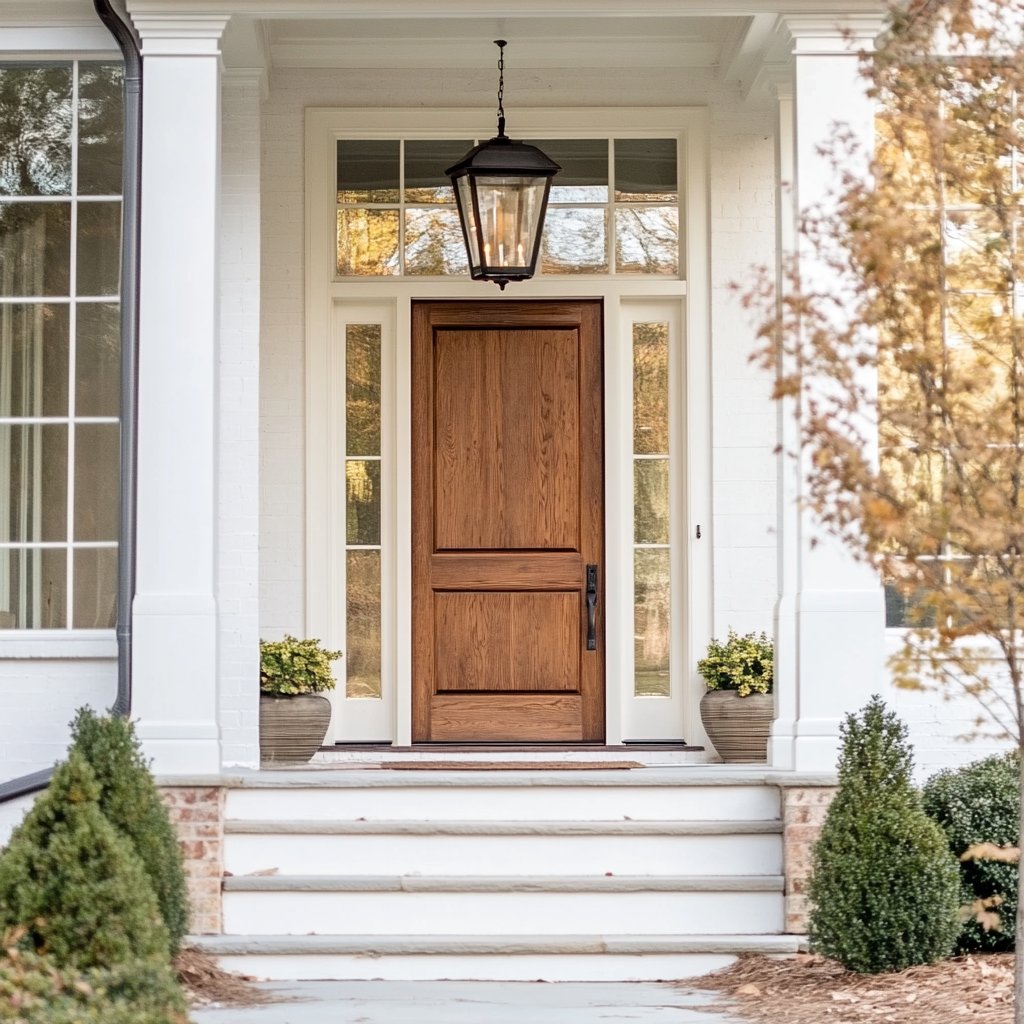
Rowhouses define most of the central city. Federal rowhouses, two stories with a flat, boxy facade, are common on Capitol Hill and in Georgetown. Victorian rowhouses, with bay windows, turrets and ornate trim, appear in Dupont Circle and Columbia Heights, and Tudor houses with half-timbering turn up in Mount Pleasant. In Kalorama, larger Beaux Arts houses stand out. Farther up Northwest, Cleveland Park and American University Park shift toward detached Queen Anne, Georgian Revival, Tudor and bungalow houses, and contemporary homes sometimes appear near Rock Creek Park.
Condominiums and cooperatives are the other major category, found in converted townhouses, mid-rise buildings and the newer districts around Navy Yard, Union Market and The Wharf. If you are weighing a rowhouse against a condo or co-op, our guide to choosing between a condo, co-op and rowhouse in DC explains how they compare for day-to-day ownership.
Parks, trails and time outdoors
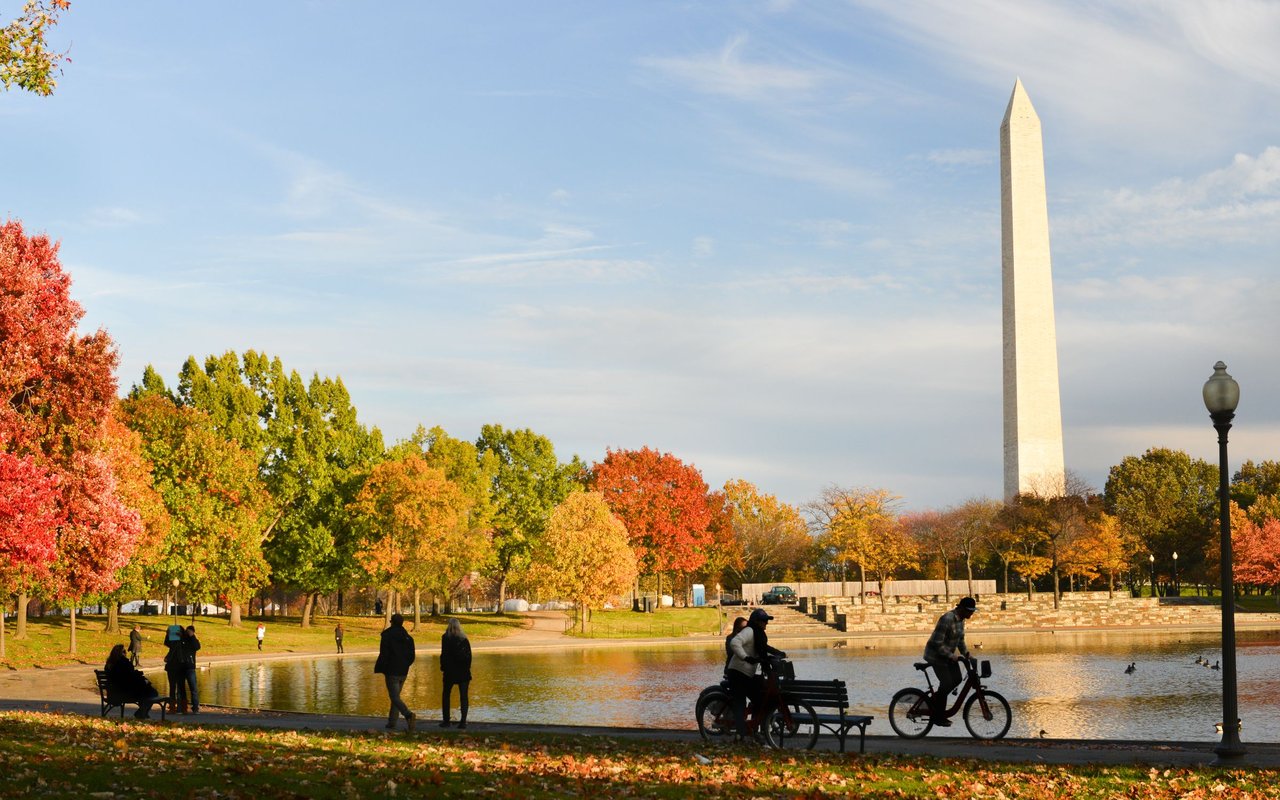
Rock Creek Park, established in 1890 and covering more than 1,700 acres, is the city's largest green space. Its 32 miles of hiking trails, a public 18-hole golf course and a tennis center with more than 24 courts are open year-round, and the Nature Center on Glover Road NW runs planetarium programs on weekends. The C&O Canal towpath begins in Georgetown and is part of a 184.5-mile national historical park. The National Mall and Memorial Parks include more than 100 monuments and memorials, and the cherry trees around the Tidal Basin were a gift from Japan in 1912.
On the east side, the Anacostia Riverwalk Trail offers views of the Capitol, and the Metropolitan Branch Trail links NoMa to Silver Spring. Yards Park and Canal Park give the riverfront its own public greens within a short walk of residential buildings.
Museums, music and the National Mall
The Smithsonian is the world's largest museum complex, and its Washington museums line the Mall alongside the monuments. Beyond the Mall, the city's cultural life is spread by neighborhood: the Phillips Collection near Dupont Circle, the Howard Theatre and 9:30 Club in the U Street and Shaw corridor, and the large-scale concerts at The Anthem on the waterfront. Nationals Park and Audi Field add a calendar of baseball and soccer in Southeast.
Getting around Washington, DC
The Metrorail network reaches most of the neighborhoods above: the Red Line serves Dupont Circle, Cleveland Park, Brookland and NoMa; the Green Line serves Shaw, U Street and Navy Yard; and the Blue, Orange and Silver lines stop at Eastern Market. Georgetown is the notable exception, with no station of its own. Beyond rail, DC Circulator buses, the water taxi network and the Southwest Shuttle fill in gaps, and the Metropolitan Branch Trail and Anacostia Riverwalk work as commuting routes on foot or by bike. Union Station and Reagan National Airport connect the District to the wider region. For buyers also considering nearby communities, see our guides to Maryland and Virginia, or our look at new restaurants in Old Town Alexandria and Bethesda's shifting center.
What to weigh when choosing a DC neighborhood
Start with how you want to move through the city. Decide whether a Metro station, a trail or a walkable market block matters most, and check how each candidate neighborhood handles it. Next, compare home type: a rowhouse brings a historic facade and often a small yard or rear patio, while a condo or co-op may add building services and a lighter maintenance load. Finally, visit on both a weekday and a weekend. Eastern Market, Union Market and the waterfront districts feel very different on Saturday than on a Tuesday morning, and that difference often decides the choice.
Our buyer's guide outlines the steps from search to closing, and the mortgage calculator helps you plan your monthly budget. You can also read our comparison of four DC neighborhoods and our advice for relocating to Washington, DC.
Continue your Washington, DC home search
Washington, DC FAQs
What are the main neighborhoods in Washington, DC?
The District has 131 neighborhoods. Buyers often start with Capitol Hill, Georgetown, Dupont Circle, Kalorama, Cleveland Park, Logan Circle, Shaw, Brookland, Navy Yard, The Wharf and Union Market, each with a different housing mix and setting.
What types of homes are in Washington, DC?
Rowhouses are the most recognizable, in Federal, Victorian and Tudor styles, along with detached Queen Anne, Georgian Revival and bungalow houses in Upper Northwest, plus condos and co-ops. Our guide to condo, co-op and rowhouse ownership goes into more detail.
Is Georgetown on the Metro?
No. Georgetown does not have its own station. Residents use DC Circulator buses, rideshare or walk from Foggy Bottom.
What parks and trails are in Washington, DC?
Rock Creek Park, the C&O Canal towpath, the National Mall, the Anacostia Riverwalk Trail, the Metropolitan Branch Trail, Yards Park and Canal Park are among the best known.
How do I get around Washington, DC without a car?
Metrorail covers most neighborhoods, supported by DC Circulator buses, water taxis from The Wharf and the free Southwest Shuttle. Many neighborhoods also connect by trail.
Why work with Paul Wesley Real Estate in Washington, DC?
Our team offers a personal, elevated home-buying experience across DC, Maryland and Virginia. You can meet the team on our agents page or learn why clients choose Paul Wesley.
Local Guidance
Ready to explore Washington, DC living?
Paul Wesley Real Estate can help you compare neighborhoods, tour homes and plan your move.